
Shimanobo (Minobu-cho, Yamanashi Prefecture) is a temple lodging located within the grounds of Minobusan Kuonji Temple. Whether you wish to focus on morning services and meditation, or enjoy meals and drinks and converse with the head priest, your preferred way of spending time is welcomed. Here, there is a profound generosity that embraces both enjoyment and prayer as part of daily life. By comparing the figure of Nichiren Shonin, who opened his teachings to diverse people, including women and samurai, with the current welcoming nature of Shimanobo, we explore the broad-mindedness of this temple lodging.
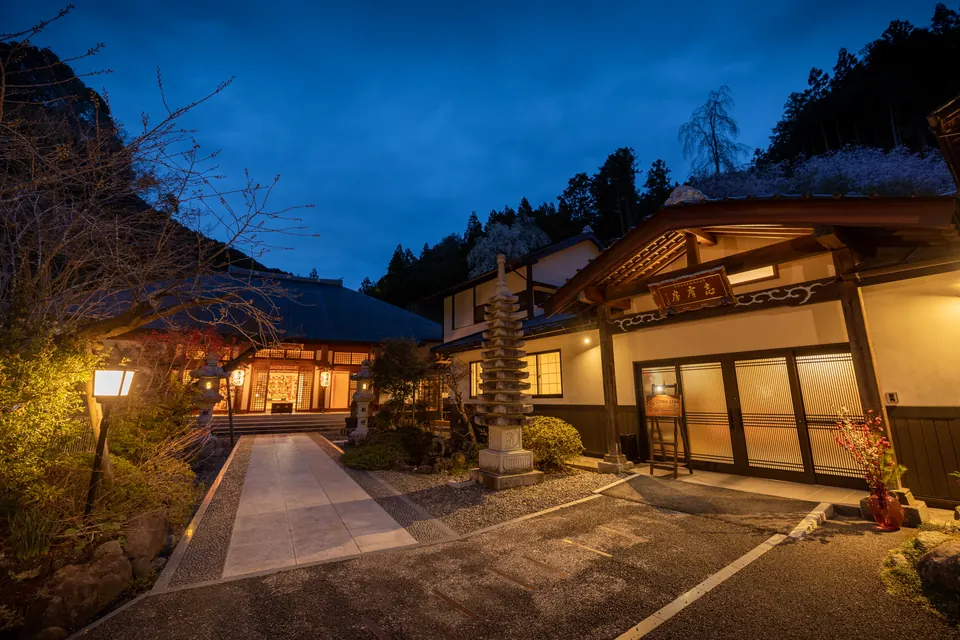
A drink together after morning service
Attending morning service, then eating and drinking afterwards. The head priest says that this, too, has long been a part of temple visits. At Shimanobo, there are times to enjoy sake and converse with the head priest, and times to quietly engage in morning services and meditation.
There's no need to suppress your desire for enjoyment, nor to hesitate in your interest in spiritual training. The charm of this temple lodging lies in its broad-mindedness, allowing everyone to pass through its gates with their own intentions.
Teachings open to diverse people, and the current state of the temple lodging
Nichiren Shonin's teachings reached people from various backgrounds, including women and samurai. By comparing this openness to people of different statuses and ways of life with Shimanobo's current welcoming approach, the charm of this temple lodging becomes clear.
Even if their reasons for visiting differ, everyone can experience the temple in their own way. We feel that Shimanobo's approach to welcoming guests reflects this teaching.
Another clue to understanding this stance is the legend passed down at Shimanobo. It tells the story of Saint Nichiren forgiving someone who tried to harm him and accepting them as a disciple.
Yamabushi Zenchi Hoin and Saint Nichiren
During the Kamakura period, near Mt. Minobu, on Mt. Komuro, there lived a yamabushi (mountain ascetic monk) who held enough power to govern Shingon sect temples throughout the Kanto region. His name was Zenchi Hoin. He challenged Saint Nichiren, who had entered Mt. Minobu, to a debate on Buddhist doctrine and a contest of spiritual power.
According to legend, when Zenchi Hoin chanted a Shingon mantra, a large rock floated in the air. However, when Saint Nichiren chanted the Odaimoku (the Lotus Sutra's title), Zenchi Hoin could not bring the rock down and was defeated.
Poisoned botamochi and a white dog
Although he surrendered at that moment, Zenchi Hoin's anger did not subside. On Saint Nichiren's way back, he invited him to rest at Jozaiji Temple, known for its inverted ginkgo tree, and offered him botamochi (rice cakes covered with sweet bean paste) laced with poison.
When Saint Nichiren gave the botamochi to a white dog, the dog vomited blood and died after one bite. Witnessing this, Zenchi Hoin resigned himself and asked to become a disciple. Saint Nichiren forgave the person who tried to kill him and bestowed upon him the name "Nichiden."
Saint Nichiden built his own hermitage on Mt. Minobu to spend his days in repentance and service by Saint Nichiren's side. In Kenji 1 (1275), this marked the beginning of "Yogyoin Shimanobo."
"It was precisely because there was an enemy that righteousness was proven."
Why did Saint Nichiren forgive someone who tried to kill him? The head priest explains:
"Even Shakyamuni Buddha had many people who sought to take his life or persecuted him. Saint Nichiren also had his life threatened many times. Yet, he forgave those people. It was precisely because there were enemies and adversaries that the righteousness of his mission, as written in the sutras, was proven."
He continues, saying that this story is not just an old tale from 750 years ago.
"There must be times when you grew as a person precisely because you had rivals or people you disliked. This is true in any era. If you can view unpleasant people in that way, you can grow even more."
When he tells this story to people who come to him with worries, many leave feeling convinced.
Teachings for "happiness in this world"
During Saint Nichiren's time, as earthquakes, famines, and wars continued, the belief spread that 'at least after death, one can go to paradise.' Saint Nichiren directly opposed this.
"Why did Shakyamuni Buddha try to save everyone? It was for happiness in this world, wasn't it? To make this world like a Buddha's world, together, while we are alive. That was Saint Nichiren's idea."
Applying teachings to daily life. This idea connects to the time spent at Shimanobo, where prayers, meals, and conversations are all valued.
The "mission" carried by the 33rd head priest
Shimanobo was subsequently passed down through generations of abbots, and in Bunsei 13 (1830) during the Edo period, it moved to its current location in Higashidani. The current head priest is the 33rd since the move to this site. The main hall houses a group of Buddhist statues created in Meio 3 (1495) during the Muromachi period.
When asked about carrying the responsibility of a temple that has continued for hundreds of years, the head priest answered without pretension:
"Ultimately, I see it as my mission. There is meaning in being born in this place. Having done this for about 30 years, I feel that to be true."
In this place, which has inherited a long history, the head priest continues to welcome visitors.
From around the world, seeking time at a temple
Shimanobo welcomes many guests from Europe and America. These are people who want to see a place where Japanese people still genuinely offer prayers, rather than just tourist spots in Kyoto or Nara.
Many guests experience the evening service and meditation, and also request guidance for the morning service at Kuonji Temple. Not a few people seek omamori (charms) and ofuda (talismans), have them consecrated, and take them home. One American woman bought ofuda, saying she would give them to her husband and son for Christmas.
Here, the legend from 750 years ago still touches someone's life today.
Before you book
* Available experiences: Evening service (approx. 60 minutes, includes sermon, included in accommodation fee) / Kuonji morning service (free, optional) / Meditation (1,000 yen) / Shodai-gyo (1,000 yen) / Sutra copying or Buddha image tracing (2,000 yen each) / Samu (temple chores). Please note that these activities may not be available due to the monk's schedule. The morning service at Kuonji is guided by the head priest, who provides a detailed explanation.
* Meals: Home-style cooking featuring local vegetables and Minobu's famous yuba (tofu skin). Shojin ryori (Buddhist vegetarian cuisine) is also available upon request. Please apply at least 7 days before check-in (details about the family kitchen will be introduced in a separate article).
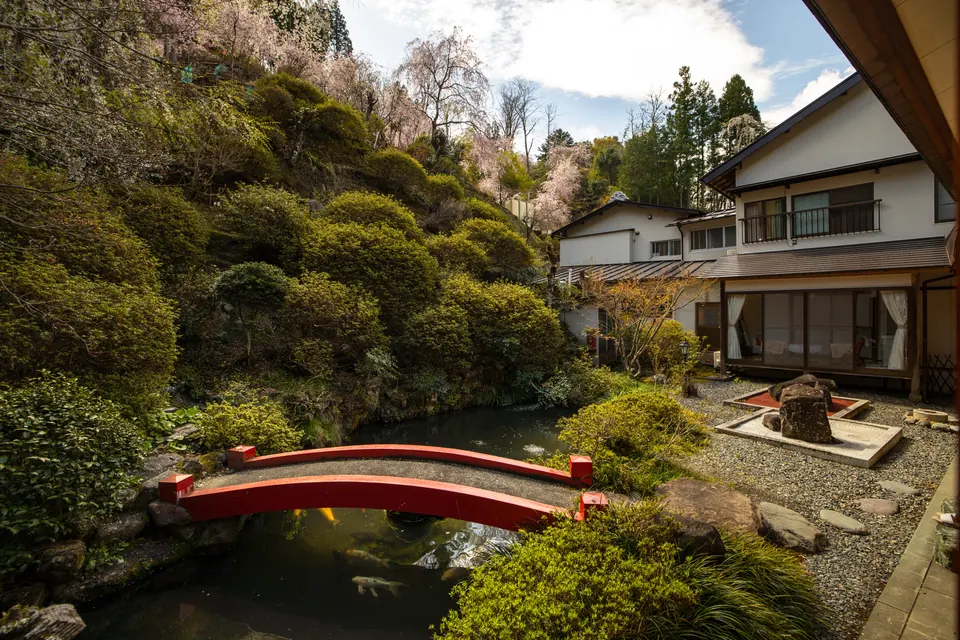
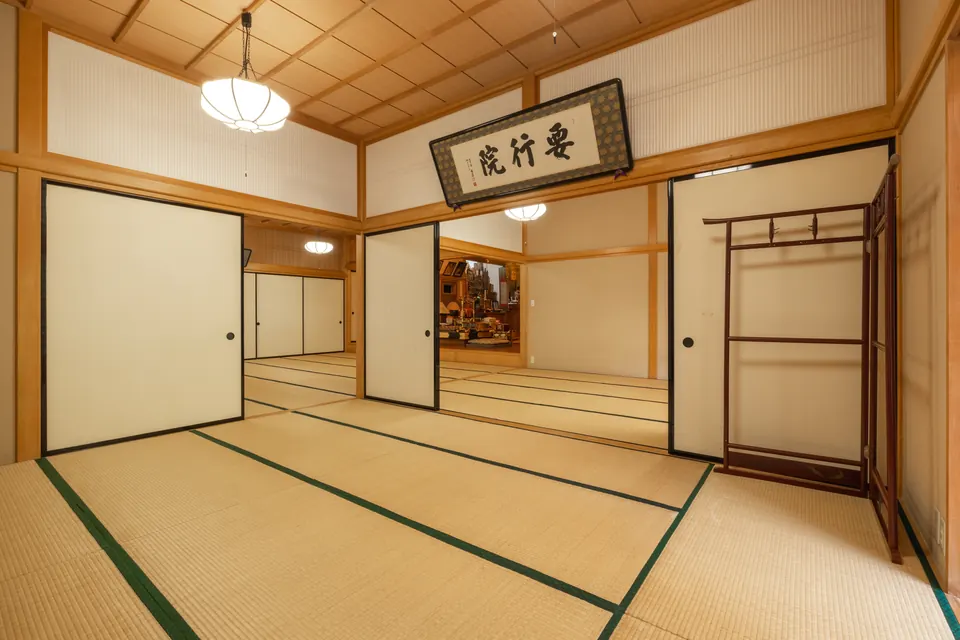
* Guest rooms: Japanese-style rooms accommodating various group sizes (capacity 10 people), and a special Japanese-style room overlooking the newly renovated courtyard (capacity 2 people), updated in 2024.
* Check-in / Check-out: 3:00 PM - 8:00 PM (until 6:00 PM with dinner) / 10:00 AM
* Access: From JR Minobu Station, take the bus to
Check availability and rates from the booking button on the Shimanobo page.
https://oterastay.com/stay/shimanobo/
In the time of Saint Nichiren, a diverse range of people, from women to samurai, encountered his teachings. Today, Shimanobo's doors are open to welcome everyone, whether you seek enjoyment or spiritual training. Why not experience time at the temple and with the head priest in a way that suits you?